
Article written by Anthony Ham
Originally published by New York Times, 8 February 2026
Researchers discovered surprising changes to former pets along the front line of combat with Russia.
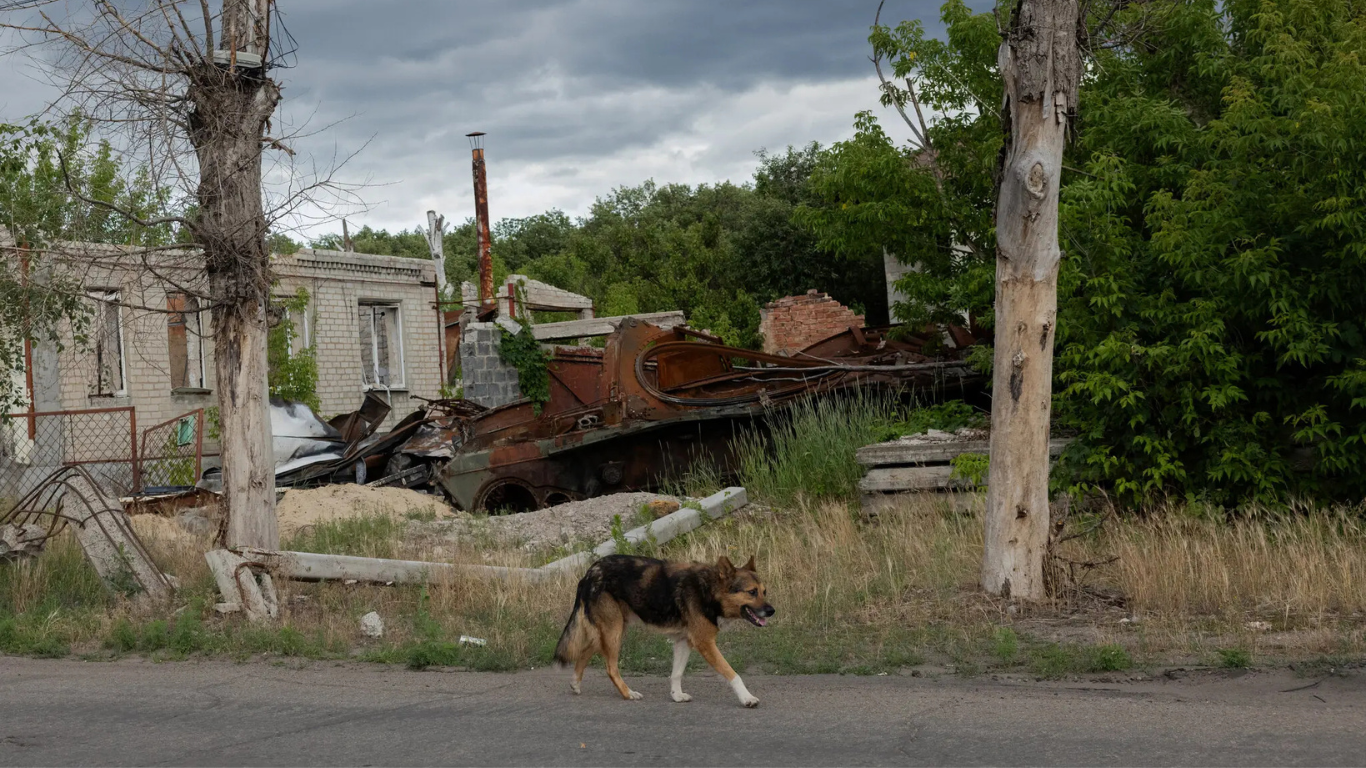
The human cost of the war in Ukraine has been well documented. But Russia’s invasion is also affecting the country’s pets in surprising ways.
In a study published in December, in the journal Evolutionary Applications, a group of researchers found that exposure to the conflict in Ukraine had, in a short period, transformed dogs that were formerly pets into the kind of dogs found in more wild environments.
Scientists gathered a variety of data from 763 dogs across nine regions of Ukraine. The team worked with animal shelters, while veterinarians and volunteers gathered data from stray dogs in potentially safe areas and, sometimes, areas designated as dangerous territories.
But gathering data on the front line was more difficult. That work was led by Ihor Dykyy, a zoologist at the Ivan Franko National University of Lviv. Dr. Dykyy served on the front line — near the city of Lyman in the Donetsk region, and later close to Kharkhiv near the border with Russia — for two years starting in 2022 as a volunteer with the Ukrainian Armed Forces.
“Many stray dogs lived with us in the village of Zarichne,” Dr. Dykyy remembered. “They were terrified by the hostilities; some suffered from shell shock. One small dog had a broken leg that hadn’t healed properly, leaving it with a permanent limp. Another was blind in one eye, having lost it in an explosion.”
Dr. Dykyy and his fellow soldiers “fed all of them, gave them shelter and provided medical care whenever possible,” he said.
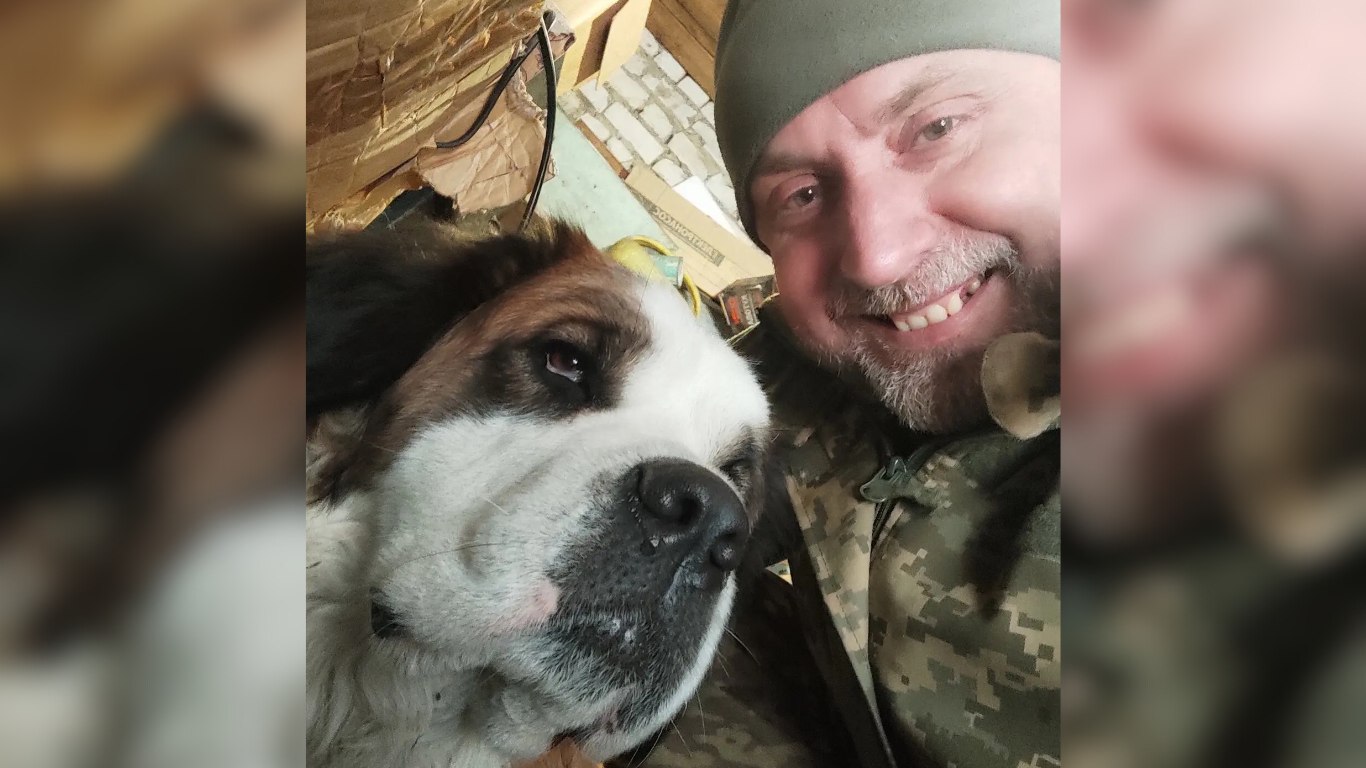 Ihor Dykyy, a zoologist at the Ivan Franko National University of Lviv, with Linda, a Saint Bernard who perished from a vehicle strike. Credit: Ihor Dykyy
Although the research focused on domestic dogs, many were no longer under the care of their owners, and were living as strays.
“From the beginning of the war, we saw a very sad situation with pets in Ukraine,” said Mariia Martsiv, who was the paper’s lead author and is a zoologist at the University of Lviv. “Some people took their pets with them, but some were simply left at train stations or left behind in the occupied territories.”
Most of the team’s findings suggested that dogs on the front line, in a remarkably short period of time, had become more like wild dog species, such as wolves, coyotes or dingoes.
Examples of the transformation abounded in the data: The frontline dogs rarely had snouts that were either short like a French bulldog’s or elongated like a dachshund’s. Many also had reduced body mass. Even their ears took on a different shape, with pointed ears more frequent than floppy ears.
“On the front lines, dogs with signs of a ‘wild’ phenotype do indeed survive more often: straight ears, straight tail, less white,” Dr. Martsiv wrote in an email.
“War acts as a powerful filter, favoring traits that improve survival under extreme conditions,” said Małgorzata Witek, an author of the study and a doctoral student at the University of Gdansk in Poland.
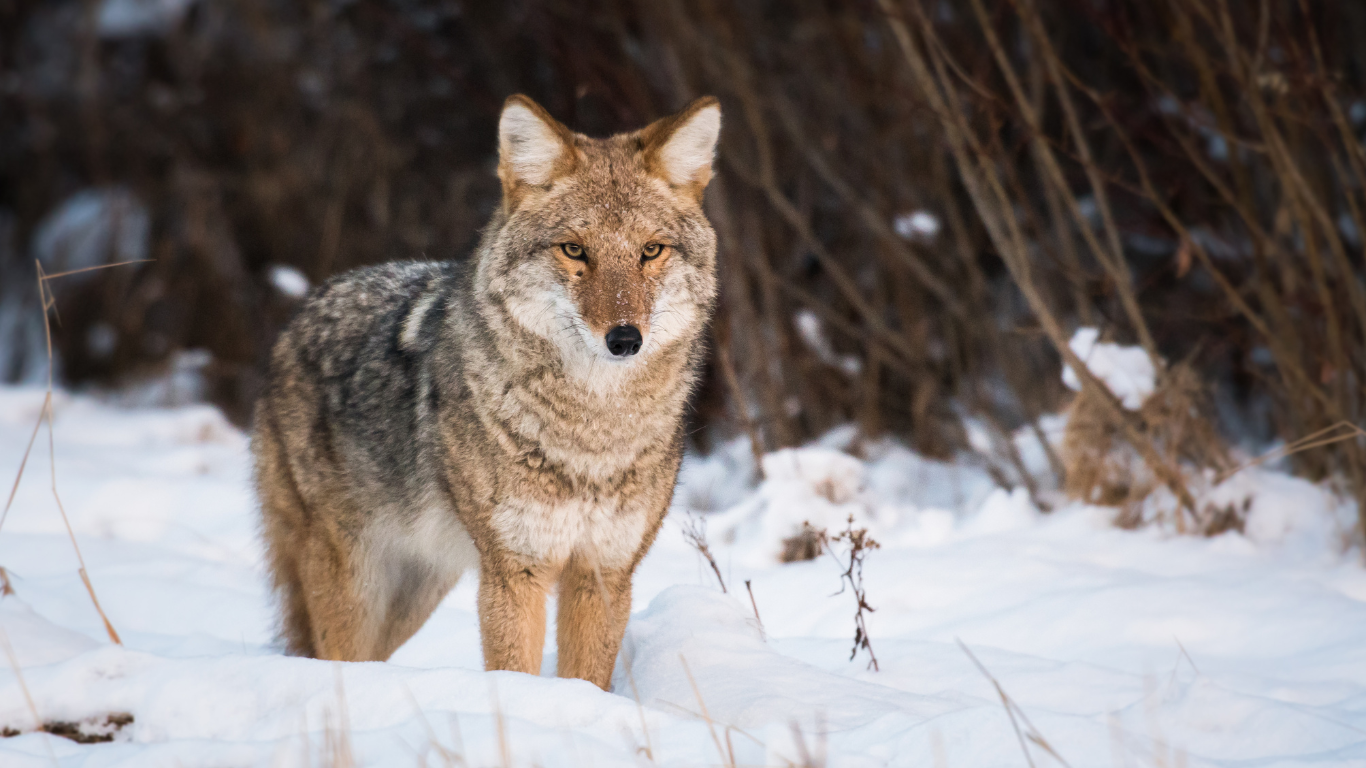
Other characteristics more commonly associated with wild dog species were found in Ukraine’s conflict zones: There were fewer old, ill and injured dogs, and dogs on the front line were more likely to be found living in groups.
“What surprised us most was how quickly these changes appeared,” Ms. Witek said. “The war had been ongoing for a relatively short time, yet the differences between frontline dogs and other populations were already very pronounced.”
But the scientists did not want their findings interpreted as war-fueled accelerated evolution.
“The changes we observe in dogs are happening too quickly to be explained by molecular evolution,” Ms. Witek said.
What’s really happening is that the conditions of war favor animals that have certain characteristics. For example, a dog with less body mass is less likely to trigger land mines and more able to hide in confined spaces, and presents a smaller target for shrapnel.
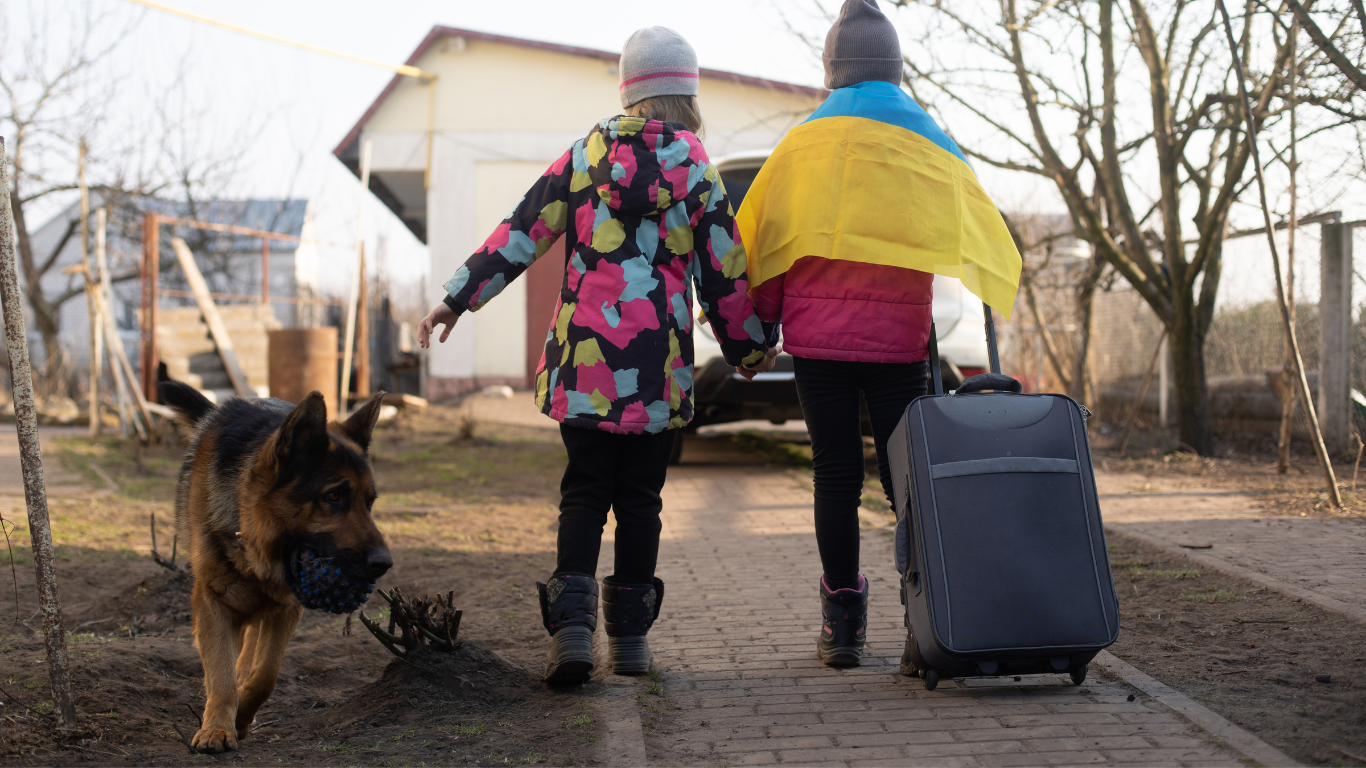
Despite evidence of apparently wild personality traits and physical characteristics, most of the dogs remained dependent on humans for food, only supplementing their diet with plants and occasional hunting. At times, dogs survived by scavenging the bodies of fallen soldiers. Some were adopted by Ukrainian troops.
But the scientists did observe some dogs on the front line that no longer depended on people for their survival.
“This can be considered as feralization, a return to living independent of humans,” said Małgorzata Pilot, leader of the project and a biologist at the University of Gdansk.
While the study was restricted to dogs, it raises questions about the broader implications of environmental damage caused by war.
“Evidence that dogs are being strongly negatively affected by the horrors of war should serve as an alarm for other species that are far less mobile and more restricted in their diets and habitat requirements,” said Euan Ritchie, a wildlife ecologist at Deakin University in Australia who was not involved in the project.
Or as Dr. Pilot put it, “Wars are not only humanitarian crises. They are also environmental disasters.”