
Dear Prime Minister and Members of the New Zealand Government,
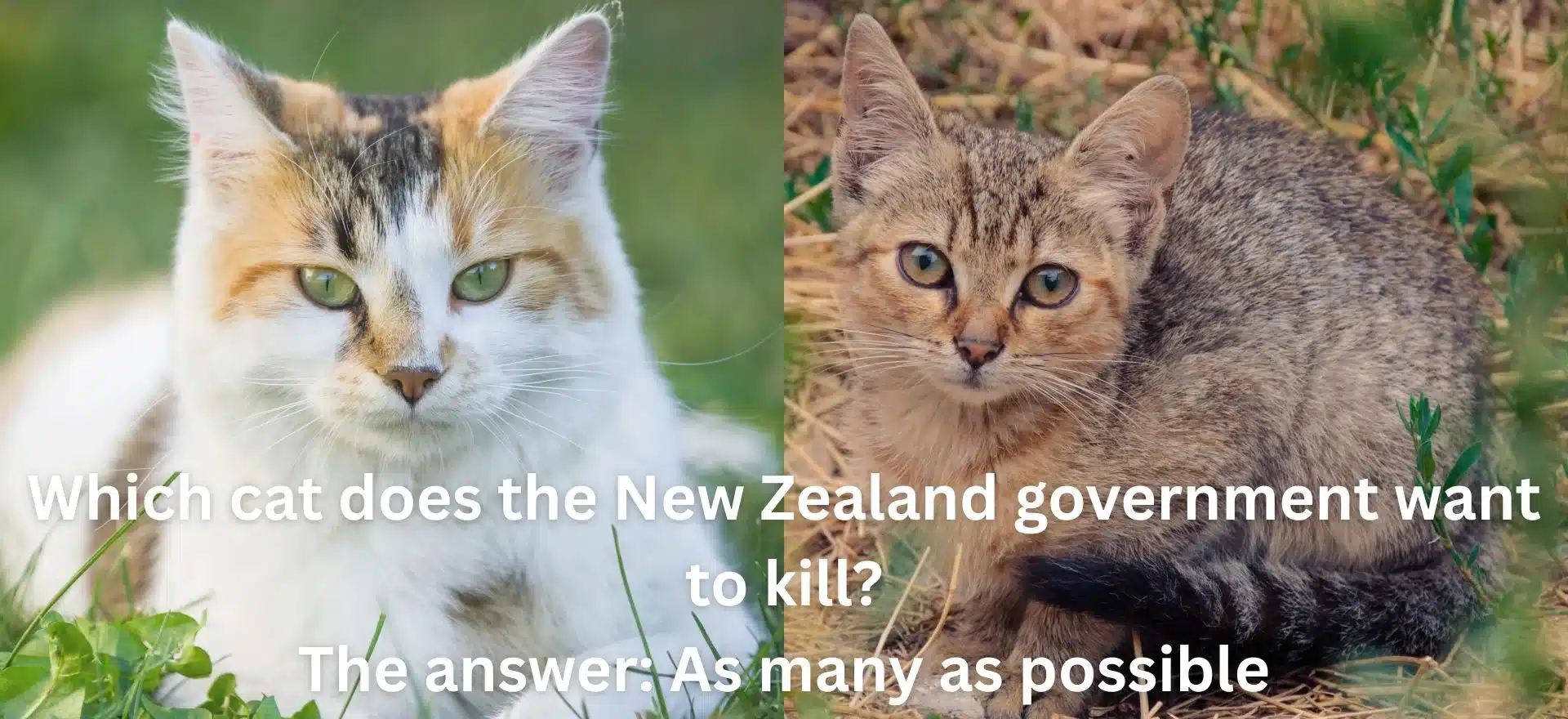
Together with the undersigned organizations and individuals, we write to express our serious concern over the inclusion of feral cats in the Predator Free 2050 Strategy, and the resulting harm this policy could cause to both animals and children.
Across New Zealand, communities are being encouraged to kill feral cats. In some cases, children are being exposed to, and drawn into, activities that normalize violence against animals. This is deeply troubling. It is also avoidable.
We recognize and respect the need to protect New Zealand’s unique biodiversity. But biodiversity protection, child wellbeing and the humane treatment of animals are not competing goals. They can and must be pursued together.
Our concerns are threefold.
- Children are not being adequately protected from harm
The Government appears not to have conducted a proper children’s rights impact assessment before including feral cats within the Predator Free 2050 Strategy.
In our view, the current approach risks normalizing violence against animals and exposing children to conduct that may be harmful to their development. New Zealand is a State Party to the United Nations Convention on the Rights of the Child (UNCRC), which requires governments to protect children from all forms of physical or mental violence. This obligation reflects a substantial body of child-development research linking exposure to violence against animals with harmful behavioral and psychological outcomes, including increased aggression towards both animals and people.
The classification of cats as “pests,” combined with public and community practices that encourage their killing, risks fostering precisely the kind of violence and moral disengagement from which children should be protected.
- Cats are not being treated humanely
The June 2025 report of the New Zealand National Cat Management Group recommends that all legislation and plans relating to feral cat management should recognize cats as sentient beings under the Animal Welfare Act 1999, be informed by science and ethics, and seek the most humane available approaches.
This is consistent with wider international guidance on humane cat population management, which warns that culling is often both inhumane and ineffective. Furthermore, devolving killing to local communities allows no oversight of methods used, with domestic cats also at risk.
The National Cat Management Group’s own work indicates that many New Zealanders, while recognizing the need for cat population management, favor humane and non-lethal approaches over lethal control.
- The policy does not appear to be transparently supported by sufficient evidence
The inclusion of feral cats within the Predator Free 2050 Strategy appears to rest on an incomplete assessment of impacts, alternatives and likely outcomes.
The National Cat Management Group report, together with the SPCA’s submission to the Predator Free 2050 review, highlights major gaps in reliable data. These include uncertainty around the number of owned, stray and feral cats; the relative effectiveness of lethal and non-lethal approaches; long-term sustainability; ethical considerations; and the broader ecological consequences of cat removal.
Where evidence is incomplete and impacts remain uncertain, a precautionary approach should apply. Policies of this significance should be based on transparent assessment, not assumption.
In light of these concerns, we call on the New Zealand Government to:
- Impose an immediate moratorium on feral cat culling
- Conduct valid, transparent, and comprehensive children’s rights, environmental, and ecological impact assessments of the current policy
- Explicitly assess science-based and humane alternatives to culling, with reference to expert evidence and international best practice
- Engage proactively with a broad range of stakeholders, including citizens, animal welfare organizations, environmental experts and child-development specialists
New Zealand has an opportunity to show leadership by pursuing a humane, evidence-based approach that protects biodiversity without exposing children to violence or abandoning basic standards of animal welfare.
Humane and effective solutions are possible. We urge the Government to act now, before further harm is done.
Network for Animals and the other signatories to this letter work with governments, institutions and civil society partners around the world to advance evidence-based animal welfare policy and humane animal management practices.
Signatures:
Network for Animals (Luke Barritt)
OIPA (Greta Barbera)
Animals Asia (Dr Jill Robinson MBE)
Fondation Brigitte Bardot (Brigitte Auloy)
Tanya Young (Director – Strategy, ACT Education Directorate)
The Humane Education Trust (Louise van der Merwe)
Professor Roshni Ladni (Childhood Trauma, International Violence Prevention)
European Link Coalition (Malcolm Plant)
Phoenix Zones Initiative (Professor Hope Ferdowsian)
PAWS (Anna Hashim-Cabrera)
Protect the Wild (Rob Pownall)
Flora and Fauna Aotearoa (Asha Andersen)
Bob Kerridge ONZM
FurLover Sanctuary
Amma Care Foundation
Plant & Animals Welfare Society – Mumbai
Animal SOS Sri Lanka
Gaïa Fodoulian Association
Animal Rescue Albania
Associazione ricomincio da Cane OdV
New Zealand Vegetarian Society
Animal and Environment Association – Bethlehem
Innocent Street Friends Society
Animal Friends Jogja
ATRA
Animal Friends Croatia
Voice of Animal Negal
Anima Mundi
Youth Development Agency
Australian Pet Welfare Foundation (Professor Jacquie Rand)