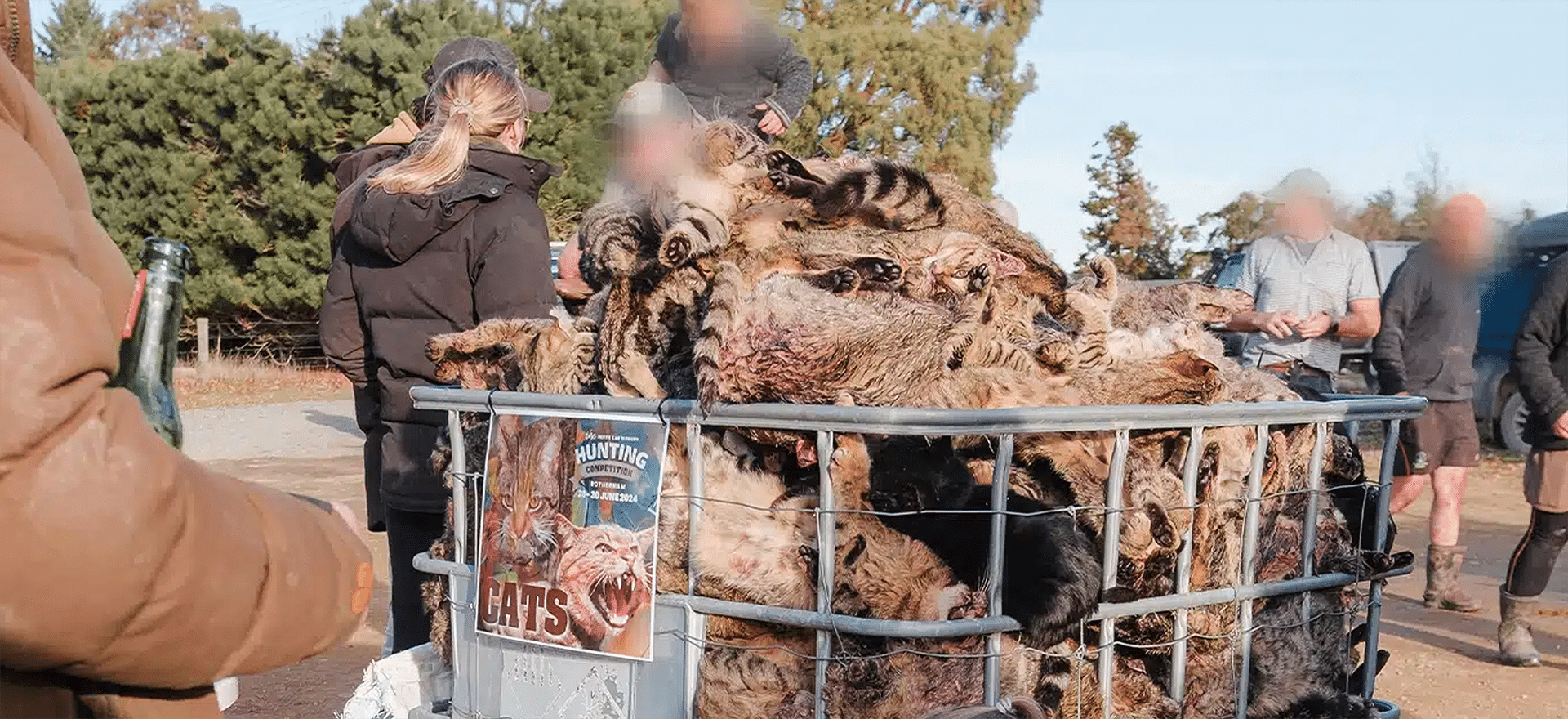
Across New Zealand, feral cats are being trapped, poisoned, hunted and shot in their thousands. The government calls it conservation. We call it cruelty – and Network for Animals is taking action to stop it.
NFA is leading an international campaign to halt the lethal control of feral cats under New Zealand’s Predator Free 2050 strategy. Working with our partners at OIPA – the International Organisation for Animal Protection – we have raised the alarm with the New Zealand government, with the United Nations, with diplomatic missions across Europe, and with international child protection bodies. And we are not letting this go.
A strategy built on killing
Predator Free 2050 was launched with the stated aim of protecting native species. In recent years, the New Zealand government quietly expanded its targets to include feral cats – opening the door to mass killing on a scale we consider indefensible.
Cats are now being trapped, poisoned and shot across open countryside. The methods are inhumane. The science behind large-scale lethal control in mainland environments is weak. And in practice, there is often no reliable way to distinguish a feral cat from a frightened domestic pet.
Children at the centre of state-sanctioned violence
What makes this campaign of killing all the more shocking is the role of children.
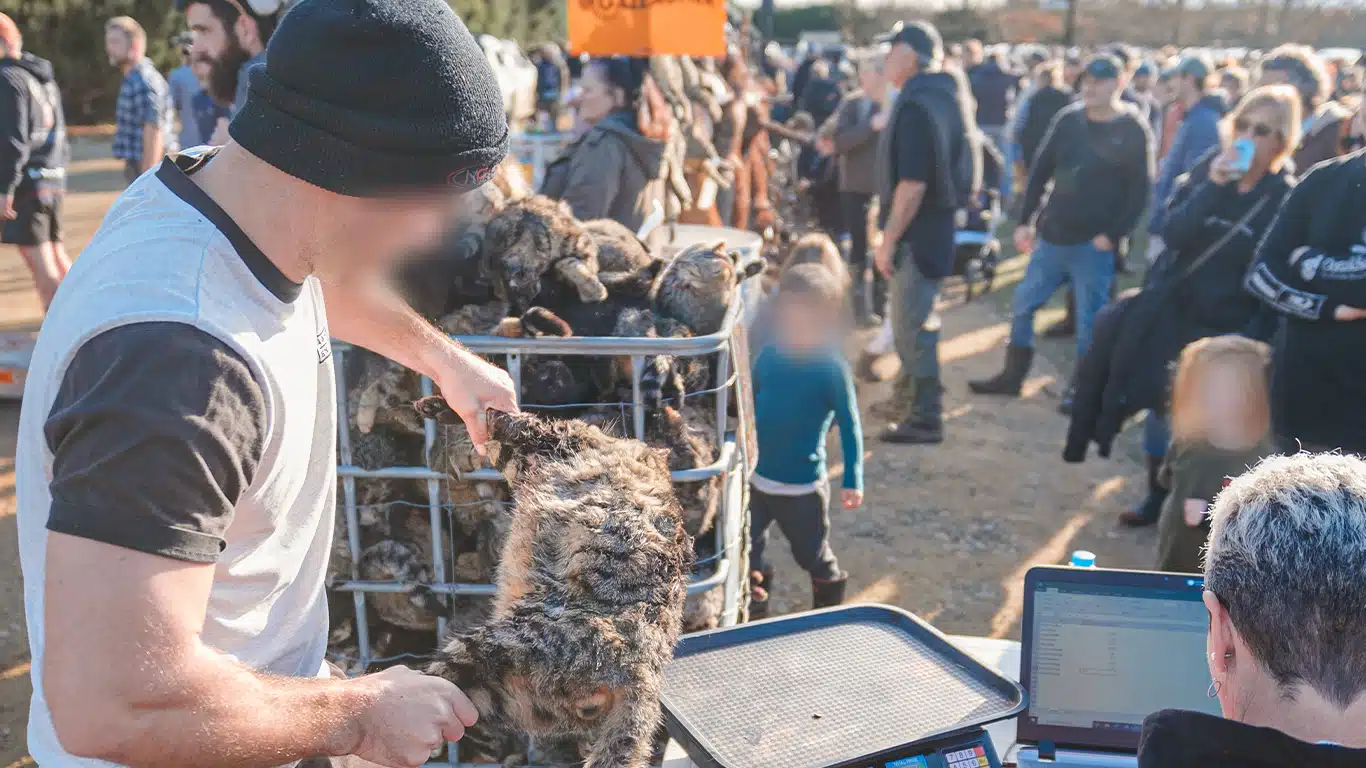
In North Canterbury, hunting competitions scheduled for June and July 2026 will see children publicly participating in killing animals. They are encouraged, rewarded and celebrated for it. The international research is clear: exposing children to organised, normalised violence against animals does long-term harm. It erodes empathy. It increases the risk of later violence – towards animals and towards people.
This is not conservation. It is a child welfare crisis.
“Children should never be encouraged to participate in, celebrate, or be desensitised to the killing of animals under the guise of education or community activity. Whatever position is taken on feral cat management, this line is non-negotiable.”
– Luke Barritt, Campaign Director, Network for Animals
What we are doing
Network for Animals has formally written to the New Zealand government – twice – calling for an immediate moratorium on cat culling, a comprehensive children’s rights impact assessment, a full environmental impact review, and the urgent evaluation of humane, science-based alternatives.
In parallel, our international partner OIPA – which holds consultative status with the United Nations Economic and Social Council (ECOSOC) and is accredited to the UN Environment Assembly – has led the diplomatic outreach, briefing UN bodies, EU institutions, and diplomatic missions across multiple jurisdictions. You can read OIPA’s own coverage of the joint action here.
Together, our letters and joint policy briefing have now been delivered to:
– New Zealand ministries including Conservation, Education, Justice, Environment, Primary Industries, Health, Social Development and Oranga Tamariki (Ministry for Children).
– The New Zealand Permanent Mission to the United Nations.
– Diplomatic missions across Europe.
– The United Nations Committee on the Rights of the Child.
– The UN Special Rapporteur on the Environment and the UN Special Rapporteur on Children.
– UNESCO, UNICEF and the European Parliament.
– The New Zealand Children’s Commissioner and the Human Rights Commission of New Zealand.
The joint policy briefing – prepared by Network for Animals and OIPA – sets out the legal, scientific and ethical case in detail. It is now in the hands of decision-makers across multiple jurisdictions.
Read the full policy briefing for detailed evidence, legal analysis, and recommendations.
This coalition extends well beyond NFA and OIPA. Animals Asia, the Brigitte Bardot Foundation, the Humane Education Trust, and welfare organisations across four continents have all stood behind the call for a moratorium and a humane review of feral cat management in New Zealand.
What you can do
We are asking our supporters to stand with us.
– Share this campaign on social media – visibility forces accountability and pressures decision-makers in New Zealand and at the international institutions where this case now sits.
– Subscribe to Network for Animals to follow this campaign as it develops – we will be back to you with further ways to act, including a petition once it is live.
– Donate so we can keep this fight in front of governments, the United Nations and the global press.
Network for Animals will not be silent while a government turns its children into hunters and its cats into targets. We will press, publish, write, brief and campaign – alongside OIPA and our coalition partners – until this changes.